Most drivers know they have two headlight modes—high beam and low beam—but few truly understand how each one impacts safety, visibility, and the overall driving experience. As lighting technology evolves and LED systems become standard, knowing the difference between high and low beam is no longer just “helpful”—it’s essential for safe night driving.
Whether you’re navigating a dark rural road or cruising through a busy city street, choosing the right beam affects how clearly you see the road and how safely others see you. This guide breaks down everything you need to know about when bright beams are used for long-range visibility, when to dim your lights, and how smart LED upgrades can transform nighttime driving. Let’s dive in.
High Beams: Maximum Visibility for Dark, Open Roads
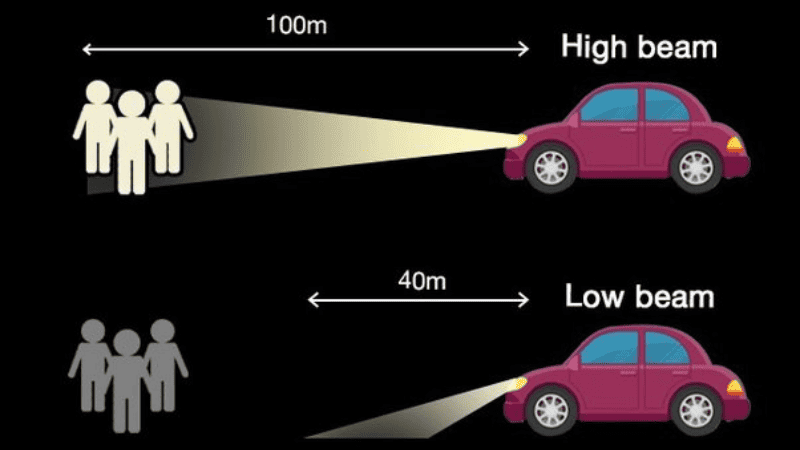
High beams and low beams each serve a unique purpose, and understanding their differences helps you stay safe, avoid glare, and follow driving laws.
1. Long-Range, High-Intensity Lighting
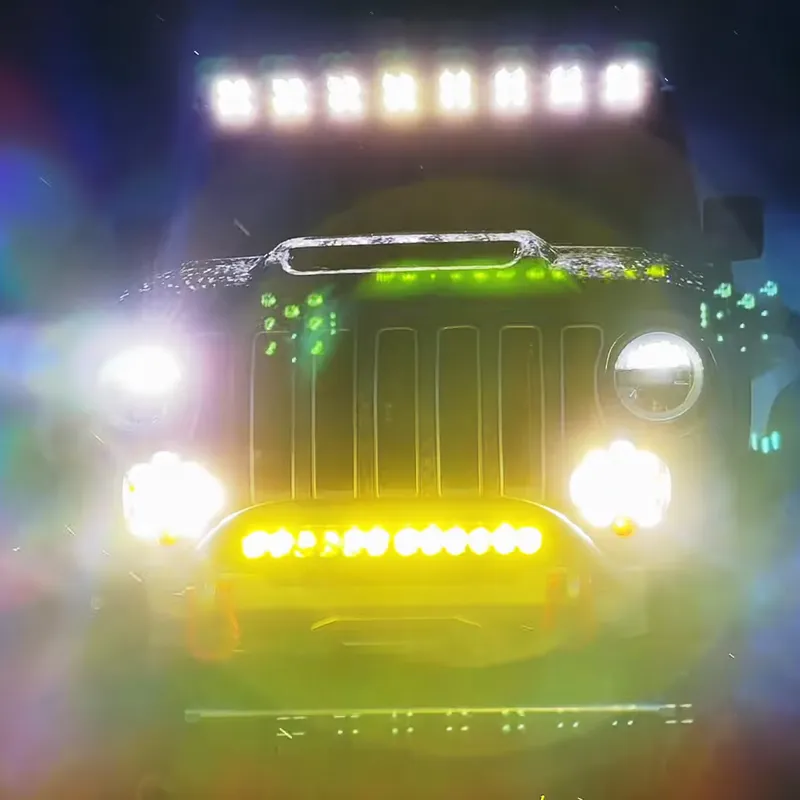
- High beams produce the brightest illumination your vehicle offers, projecting a powerful line of light up to 350–500 feet ahead.
- Their uncapped upper beam pattern lights up tall road signs, wildlife, and obstacles far in advance.
- Because bright beams are used for maximum visibility, they’re ideal for highways and rural areas without streetlights.
2. Wider and Taller Beam Angle
- High beams are positioned at a higher vertical angle, helping drivers see both the road and its surroundings.
- This makes them valuable for spotting hazards like fallen branches, deer, or sharp curves early.
- However, this tall beam angle is also why they cause glare and must be used carefully.
3. Not Suitable in Fog or Bad Weather
- In rain, fog, or snow, the intense light reflects back into your eyes.
- This reflection reduces visibility, making high beams counterproductive in such conditions.
- Low beams or fog lights are the correct choice when visibility drops.
4. Designed for Open, Clear Roads Without Traffic
- High beams are legally restricted in many regions because they blind other drivers.
- You should only use them when the road ahead is fully clear of oncoming vehicles.
Low Beams: Your Everyday, All-Weather Driving Lights
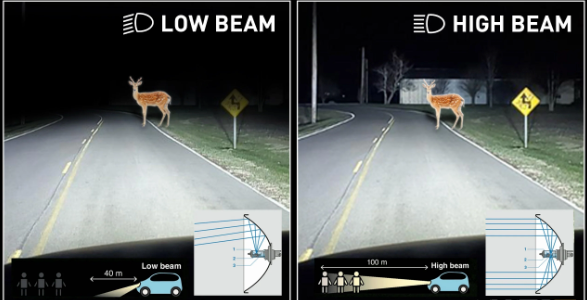
1. Lower Angle, Controlled Cutoff Line
- Low beams feature a downward-slanted beam pattern with a sharp cutoff line.
- This prevents glare for oncoming cars while providing a clear, focused view of the road ahead.
- The cutoff design is intentional—safety first.
2. Optimized for City & Suburban Driving
- Low beams are the default lights for driving in traffic, neighborhoods, and lit urban areas.
- They illuminate about 200 feet ahead—perfect for typical speeds and environments.
- They also work better with reflective road markings and lane dividers.
3. Best Performance in Rain, Fog & Snow
- Unlike high beams, low beams do not bounce off moisture in the air.
- Their downward angle helps maintain visibility in foggy and rainy conditions.
- They’re required by law whenever visibility drops below a certain level.
4. Required for Night Driving with Oncoming Traffic
- Low beams ensure safety for everyone on the road.
- When another car approaches, low beams become mandatory.
- They prevent glare while still giving you a clear path forward.
When to Use High Beams (Bright Beams)
1. Rural or Dark Highways Without Oncoming Traffic
- High beams shine far and wide, making them perfect for isolated roads.
- They allow early detection of animals, pedestrians, or sudden road changes.
2. When Driving 45 mph or Higher at Night
- At higher speeds, you need longer reaction time.
- High beams illuminate farther distances, giving you more time to respond.
- Many professional truck drivers rely on this advantage.
3. Roads Without Streetlights or Ambient Lighting
- In areas where lighting is minimal or nonexistent, high beams become invaluable.
- They compensate for the lack of visibility by lighting up the entire forward path.
4. Only When No Cars Are Ahead or Approaching
- High beams become dangerous if used improperly—they can blind drivers up to 500 feet away.
- Always dim them when approaching another vehicle from the front or behind.
When to Use Low Beams
1. City, Residential, and Traffic-Heavy Areas
- Low beams are designed for environments where other drivers or pedestrians are present.
- Their controlled beam prevents glare, making them safe for everyday use.
2. During Fog, Rain, or Snow
- Low beams reduce reflection from moisture in the air, improving visibility.
- High beams can cause white-out glare—dangerous in poor weather.
3. Driving at Night in Well-Lit Areas
- Streetlights + low beams provide ideal illumination.
- High beams would be redundant and distracting to other drivers.
4. When Following or Approaching Another Vehicle
- Low beams protect other drivers’ visibility.
- Switching to high beams in these situations is unsafe and often illegal.
Why Headlight Quality Matters More Than Ever in 2026
As LED technology advances, lighting quality directly impacts road safety. Modern headlights—especially premium LED systems—provide:
- better beam precision
- longer lifespan
- improved visibility
- lower power consumption
If you work in automotive lighting or source lights for business, partnering with a reliable LED work lights manufacturer ensures beam accuracy, compliant brightness levels, and long-term durability. Choosing a poor-quality headlight can compromise both performance and safety.
Conclusion: See Better, Drive Smarter, Stay Safer
High beams and low beams are more than just two settings on your headlight switch—they’re tools that help you drive confidently in every situation. Understanding the difference between high and low beam ensures you always choose the right light for the environment, weather, and traffic conditions. When used properly, each mode enhances visibility, reduces glare, and keeps everyone on the road safer.
As vehicles move toward smarter and more efficient lighting technologies, mastering your headlight settings becomes even more important. Whether you’re navigating a dark highway with high beams or cruising through city streets on low beams, the right choice can dramatically improve your nighttime driving experience. Stay aware, drive smart, and let your headlights work for you—exactly the way they were designed to. Contact XRLL Lighting now!