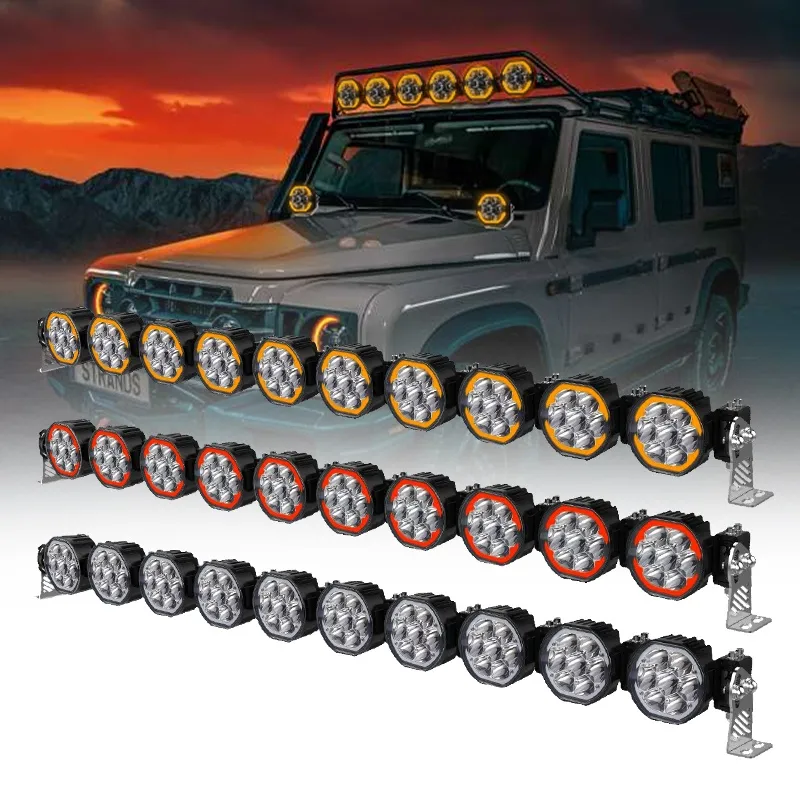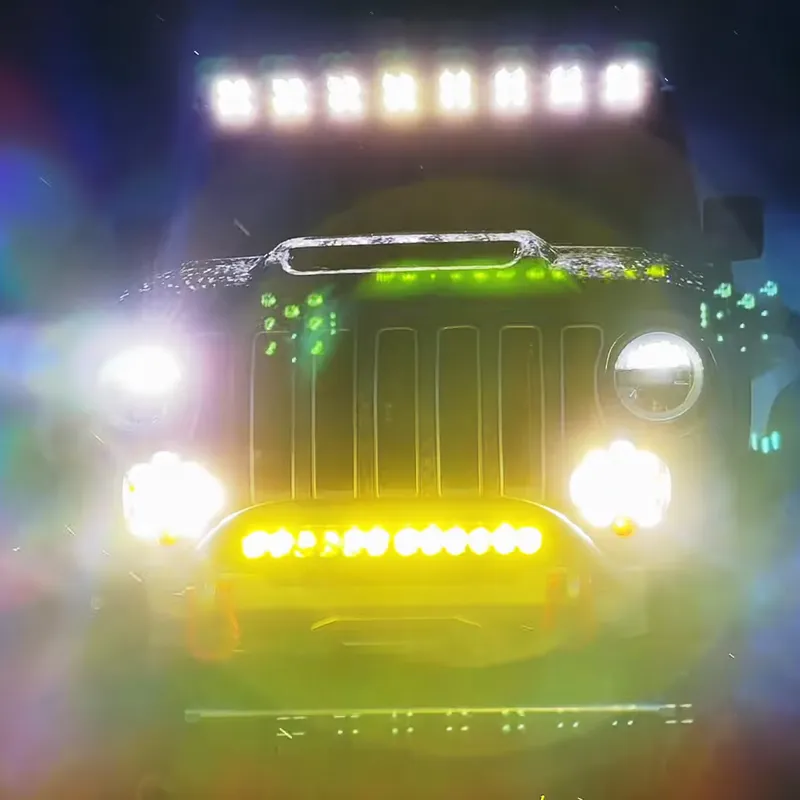
Choosing the right 12 volt LED work lights for tractors is a direct investment against operational downtime. Standard halogen bulbs frequently fail from vibration and drain power, causing expensive delays during critical planting or harvesting windows. A single burnout can halt nighttime fieldwork, impacting both productivity and operator safety.
This guide benchmarks the top models against a 50,000-hour operational life standard. We evaluate lights based on their IP67/IP68 rating for dust and water protection, true lumen output, and beam pattern efficiency to help you select a system that eliminates common failure points in harsh agricultural environments.
Why Upgrade Tractor Lighting to 12V LED Work Lights
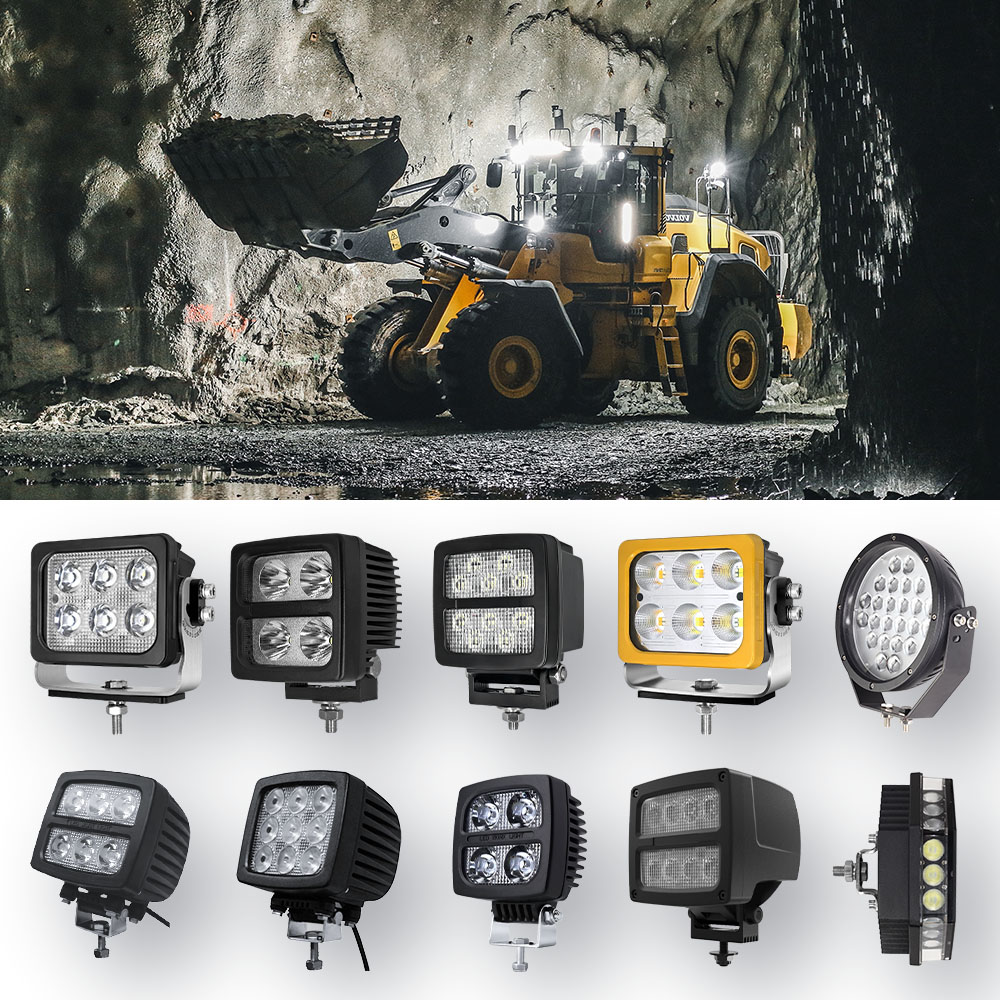
Upgrading to 12V LED work lights boosts operational safety and cuts maintenance costs by delivering superior brightness, efficiency, and durability in harsh farm environments.
Superior Visibility and Operational Safety
Switching to LED work lights is a direct upgrade to operator safety and field awareness, especially during night operations or in poor weather. Unlike older halogen bulbs, LEDs provide a cleaner, brighter light that makes it easier to spot obstacles and reduces eye fatigue over long shifts.
- Delivers significantly brighter illumination, typically 2,000-4,000 lumens, compared to the 700-1,200 lumens of traditional halogen bulbs.
- Produces a clean, white light that reduces shadows and enhances detail recognition, helping operators identify field obstacles and reduce eye strain.
- Provides instant-on capability without warm-up time or flickering, improving real-time visibility and safety during nighttime operations.
Addressing High Energy Demands and Frequent Maintenance
Traditional lighting systems drain power and require constant bulb replacements, leading to unnecessary downtime. LEDs solve this by consuming far less energy and offering a service life that outlasts halogen bulbs by a factor of ten or more. This means less strain on the alternator and fewer interruptions during critical planting or harvesting windows.
- Consumes 50-70% less power than older lighting systems, reducing the electrical load on the tractor’s alternator and extending battery life.
- Offers an operational lifespan exceeding 50,000 hours, which is about 10 times longer than the average 2,500-hour life of traditional bulbs.
- Eliminates common failures from filament breakage, significantly cutting down on equipment downtime and the costs associated with frequent replacements.
Engineered for Durability in Harsh Agricultural Environments
Agricultural work demands equipment that can handle vibration, impacts, dust, and moisture. LED work lights are built for these conditions. Their solid-state design and robust housings ensure they keep working reliably, season after season, without the fragility of filament-based bulbs.
- Built with a solid-state design using robust aluminum housing and an optical-grade polycarbonate lens to resist heavy vibration and impacts.
- Sealed to an IP67/IP68 rating, ensuring protection against dust ingress and water immersion during demanding weather conditions.
- Designed to operate reliably across a wide temperature range from -40°C to 105°C, guaranteeing consistent performance from planting to harvest.
Key Specs Explained: Lumens, Beam Patterns, Wattage, and Amp Draw
Prioritize lumens for actual brightness, not wattage. A light’s beam pattern and low amp draw are equally critical for performance and vehicle electrical health.
Understanding Light Output: Lumens vs. Wattage
Lumens (lm) measure the total visible light a source produces and is the only true indicator of brightness. Wattage (W) just measures energy consumption. Modern LED technology makes wattage an outdated metric for performance, delivering high lumen counts with very low power use.
A typical halogen bulb might produce 700-1,200 lumens. In contrast, a modern LED can deliver 6,000 to 12,000 lumens using a fraction of the power. When evaluating lights, the lumen rating is the core performance spec; wattage is simply an efficiency metric.
Matching the Beam Pattern to the Task
A light’s beam pattern determines how its lumen output is shaped and distributed. Choosing the right pattern is just as important as choosing the right brightness, as it directs the light precisely where it’s needed for a specific job.
- Spot Beams: These produce a concentrated, narrow cone of light designed for maximum long-distance visibility. They are ideal for high-speed driving or search operations where you need to see far ahead.
- Flood Beams: These create a wide, dispersed pattern to illuminate broad areas at shorter distances. They are the standard for tractors, forklifts, and construction sites where peripheral vision is critical.
BestAutoLamp uses optical simulation systems to precisely calibrate each beam pattern. This process ensures light is directed exactly where it’s needed, maximizing useful illumination and eliminating dangerous glare.
How Low Amp Draw Protects Your Vehicle’s Electrical System
Amp draw is the amount of electrical current a light pulls from the vehicle’s alternator and battery. High-efficiency LEDs have a very low amp draw, often just 3-4 amps, compared to the 10+ amps required by older halogen or HID systems.
This reduced electrical load is critical. It prevents overloading the alternator, extends battery life, and allows for running multiple lights and other accessories without causing electrical strain. Our lights are engineered for maximum luminous flux with minimal current consumption, ensuring safe compatibility with both OEM and aftermarket electrical systems.
Choosing Flood, Spot, or Combo Beams for Different Tractor Tasks
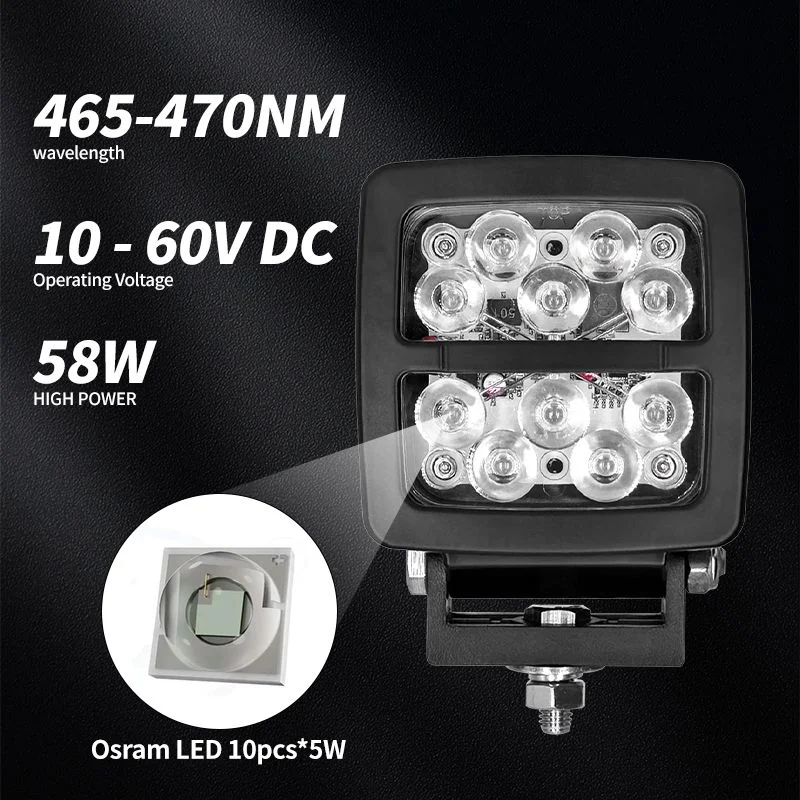
Matching beam patterns to specific tasks is key; floods provide wide coverage, spots offer distance, and combos deliver versatile, all-around performance.
Defining the Core Beam Patterns: Flood, Spot, and Combo
- Flood beams produce a wide, expansive light pattern designed to illuminate a large area at a shorter distance, ideal for general workspace visibility.
- Spot beams create a narrow, highly concentrated beam of light that travels a long distance, perfect for seeing obstacles or terrain far ahead.
- Combo beams integrate both flood and spot optics into a single housing, providing a versatile solution with both wide peripheral lighting and long-range forward projection.
Matching the Right Beam to Common Field Operations
- For tasks like planting, spraying, or tilling, flood beams mounted on the cab or fenders are critical for monitoring the full width of implements and ensuring even coverage.
- When harvesting or transporting equipment, forward-facing spot beams are necessary to identify hazards and navigate safely down long rows or dark roads.
- For general utility work, combo lights are often the best fit, illuminating the immediate work area for tasks like loading while providing the distance needed to move between locations.
Achieving Task-Specific Performance with Calibrated Optics
BestAutoLamp uses advanced optical simulation systems to precisely calibrate the light distribution for each LED work light, ensuring its beam pattern meets specific operational demands. This engineering process ensures consistency, so a flood beam provides maximum uniform coverage and a spot beam delivers focused distance without wasted light spill. By controlling the light pattern at the design stage, these lights provide reliable, purpose-built illumination that directly improves operator visibility and productivity for each tractor task.
Top 12V LED Work Lights by Budget and Performance Tier
Work light performance tiers are defined by lumen output, beam quality, and durability, directly impacting operational safety and long-term costs.
Defining Performance Tiers: Lumens, Beam Patterns, and Durability
- Entry-Level (Budget): These lights prioritize affordability and are suitable for general, close-range tasks. They typically offer lower brightness (under 3,000 lumens) and basic flood beam patterns.
- Mid-Range (Balanced Performance): This tier provides a balance of cost and functionality, featuring moderate brightness (3,000–6,000 lumens), improved optics with combo flood/spot beams, and more durable housings for regular use.
- Premium (High-Performance): Designed for demanding applications, this tier delivers maximum brightness (over 6,000 lumens), precision optics for long-distance visibility, and robust construction certified for harsh environments.
The Trade-Off: Balancing Initial Cost Against Long-Term Reliability
While budget-friendly lights offer low upfront costs, they can lead to higher long-term expenses from frequent replacements and equipment downtime.
Operator safety and productivity are directly impacted by lighting quality. Inexpensive lights with poor optics can increase eye strain and reduce visibility in critical work zones.
A key operational challenge is finding lights that resist constant vibration and environmental stress. Lower-cost units often use materials that fail prematurely in agricultural or industrial settings, negating initial savings.
Key Specifications of High-Performance Lights: Materials and Protection
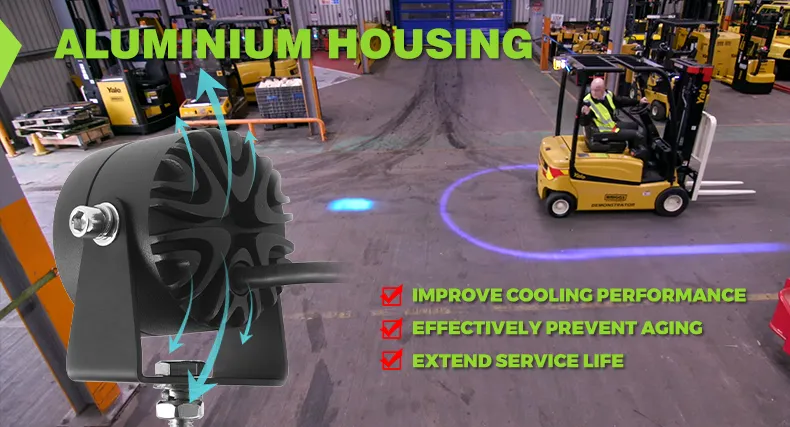
- Aluminum Housing: High-performance lights use superior materials like aluminum for efficient heat dissipation, which is critical for maintaining LED lifespan and brightness over thousands of hours.
- IP67 / IP68 Rating: This is a key indicator of a premium work light, ensuring it is fully sealed against dust and water ingress during operation in adverse weather.
- High-Power LED Chips: Top-tier lights utilize chips from recognized brands like OSRAM or Philips to guarantee consistent output, reliability, and energy efficiency.
Final Tractor Lighting Layout and Buying Checklist
A solid tractor lighting plan balances electrical capacity, environmental durability, and material ratings to ensure reliable performance in harsh agricultural settings.
Assess Your Tractor’s Electrical Capacity and Visibility Gaps
- Alternator Capacity: Confirm your tractor’s alternator can support the total amperage draw from new LEDs, which can cut power use by 60-75% compared to halogen.
- Visibility Gaps: Identify key work zones like front paths, rear implement areas, and side blind spots to eliminate shadows and improve coverage.
- Operating Hours: Prioritize lighting for nighttime or low-light conditions, where brighter, whiter light improves operator safety and reduces eye strain.
Verify Durability for Harsh Agricultural Environments
- Solid-State Build: Choose lights with solid-state construction, as they lack the fragile filaments found in traditional bulbs and are inherently more resistant to vibration and shock.
- Sealed Housings: Look for sealed housings that block ingress from dust, moisture, and high-pressure washing during routine equipment cleaning.
- Temperature Range: Ensure lights are rated for a wide operational temperature range to maintain stable performance in both extreme heat and cold.
Select Lights with a Minimum IP67 Rating and Robust Materials
- IP Rating: Confirm an IP rating of IP67 or higher, which guarantees the light assembly is fully protected against dust and can withstand temporary water immersion.
- Housing Materials: Look for housings made from aluminum and ABS to provide both strength and efficient heat dissipation, extending the LED’s 50,000-hour operational life.
- Lens Material: Verify that lenses are made from optical-grade polycarbonate (PC) for high impact resistance and protection against UV-induced yellowing over time.
Frequently Asked Questions
How many lumens do I really need for tractor work lights at 12 volts?
For effective visibility in demanding agricultural operations, 12V LED work lights should deliver between 2,000 and 4,000 lumens. This output is substantially brighter than traditional halogen bulbs, which typically produce only 700-1,200 lumens. The clean, white light from a higher-lumen LED enhances detail visibility, reduces shadows, and minimizes eye strain during extended nighttime work.
Should I choose flood, spot, or combo patterns around the tractor?
The research data does not specify beam patterns, but it emphasizes achieving both broad situational awareness across large work areas and focused detail visibility to identify obstacles. The compact design of LED lights allows for versatile placement on tractor frames and implements. This suggests that a strategic combination of lights can be installed to create a customized lighting setup that meets the needs for both wide-area illumination and focused task lighting.
Will 12V LED work lights overload my alternator or wiring?
No, upgrading to 12V LED work lights is designed to prevent electrical overload due to their exceptional energy efficiency. LEDs typically draw only 3-4 amps, a significant reduction from the 10 amps or more required by halogen or HID systems. This lower power consumption, representing a 60-75% energy saving, protects the alternator and extends battery life, even when running multiple lights.
How do I mount and wire LED work lights on an older tractor safely?
The compact size of LED work lights provides a key advantage for installation on older tractors, enabling them to be mounted in restricted spaces on frames and implements where larger traditional fixtures cannot fit. This offers greater flexibility in achieving optimal light placement. From a safety perspective, their low power draw of just 3-4 amps reduces the electrical load on the tractor’s system, making them a safer upgrade for equipment with limited electrical capacity.
Are cheap import LEDs good enough for daily farm use, or should I buy premium brands?
For reliable daily farm use, any LED light must be durable enough for harsh operating environments, a quality often found in well-constructed units. Key features to look for include a solid-state construction that is resistant to vibration, shock, and environmental stress, and the absence of fragile glass or filaments. A long operational lifespan, exceeding 50,000 hours, is also critical as it directly reduces maintenance, labor costs, and equipment downtime.
Final Thoughts
While generic lights offer lower upfront costs, our IP68-sealed aluminum housings are the only way to safeguard your reputation against customer complaints caused by vibration failure and water ingress. Dependable inventory protects your brand and eliminates costly after-sales support.
With years of experience in industrial vehicle lighting, Best Auto Lamp focuses on manufacturing durable safety lights that perform reliably in demanding environments.
Don’t guess on durability—verify it. We recommend starting with a trial order to test our build quality and beam performance firsthand. Visit Best Auto Lamp to request a product catalog or contact our team to discuss your OEM and wholesale requirements.