Following a proper LED forklift light buying guide can be the difference between a safe warehouse floor and a reportable incident that triggers an OSHA investigation. Standard-issue forklift lights are often an afterthought for manufacturers, leaving fleet managers with dim, unreliable halogen bulbs.
This guide provides a technical standard operating procedure for upgrading your fleet. You will learn how to configure red and blue pedestrian warning systems, and use a final checklist to standardize your procurement process.
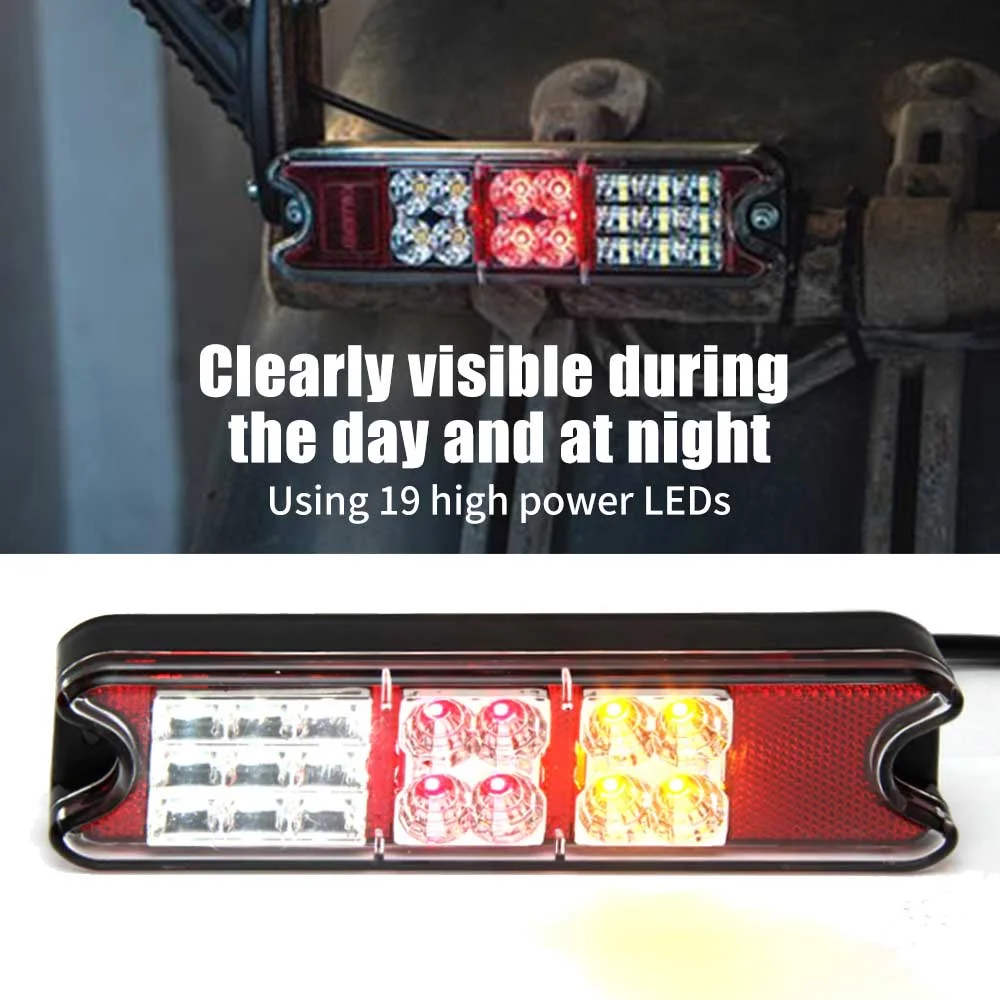
A practical example is the 1334R forklift tail light developed by Best Auto Lamp, engineered specifically for high-traffic warehouses and logistics facilities. Its high-intensity projection and rugged construction help operators create a clear visual warning zone around moving equipment.
When and why to upgrade forklift lighting
Upgrading forklift lighting is a strategic decision driven by safety data, operational costs, and equipment durability, not just bulb replacement cycles.
Operational Triggers for a Lighting System Review
A review of your forklift lighting system is necessary when operational data points to clear inefficiencies. Start by examining maintenance logs. If they show frequent halogen bulb replacements, you are losing money not just on parts but on the operational downtime required for each change. Next, analyze energy costs and battery performance. Older lighting technologies draw significant power, shortening the operational life of electric forklift batteries and increasing energy expenses.
The most critical trigger is safety. Correlate any incident reports involving collisions or near-misses with areas or shifts known for poor visibility. If accidents align with outdated or failing lights, an upgrade becomes a direct solution to a known risk.
Technical Superiority in Demanding Environments
LED systems offer significant technical advantages in industrial settings. Unlike traditional bulbs with fragile filaments susceptible to damage from vibrations, solid-state LEDs are inherently shock-resistant and built for rough applications. For operations in dusty or wet conditions, look for an IP67 or IP68 rating, which confirms the housing is completely sealed against particle ingress and can withstand water immersion. This durability ensures reliable performance day after day.
Modern LEDs also provide superior light control. Features like precisely engineered beam patterns—such as focused lines or arcs—create clear “no-go” zones on the floor, enhancing an operator’s spatial awareness and drastically reducing dangerous shadows and blind spots.
Why Red and Blue Forklift Safety Lighting Is Important
Red and blue LED safety lights create unambiguous visual zones, directly reducing pedestrian-forklift incidents and improving operator awareness in high-traffic industrial environments.
Establishing Clear Visual Warnings for Pedestrians
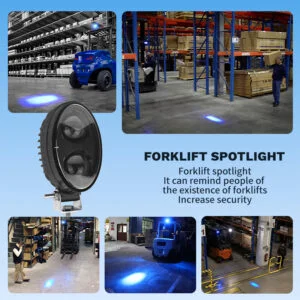
Forklift safety lights project a high-contrast moving light pattern directly onto the floor, creating a clear visual buffer zone around the vehicle. This system is especially effective in noisy areas where audible alarms are easily drowned out. A blue spotlight, typically mounted on the front or rear, projects a beam 10 to 20 feet ahead of the forklift’s direction of travel, giving pedestrians advance warning around blind corners and at aisle intersections. Red side-line lights complete the system by creating a bright “halo” that defines a ‘no-go’ zone, usually 2 to 5 feet along the sides of the vehicle. This visual perimeter clearly communicates a safe distance for foot traffic to maintain.
Enhancing Vehicle-to-Vehicle Visibility in Congested Areas
In busy warehouse aisles and at intersections, red and blue lights provide a critical visual cue for other equipment operators. The intense, colored light cuts through ambient factory lighting, ensuring early detection long before an audible alarm might be heard. This early warning significantly reduces the risk of vehicle-to-vehicle collisions in high-traffic zones. The universally recognized warning colors create an immediate psychological prompt for caution, offering a reliable safety layer where horns and beepers are often ineffective or ignored due to constant background noise.
Meeting Safety Compliance with Durable LED Technology
Modern safety lights utilize solid-state LED technology, which is inherently resistant to the heavy shock and vibration common in forklift operations. Unlike fragile halogen filaments, LEDs offer a long operational lifespan of 30,000 hours or more with consistent brightness. They also draw minimal power from the forklift’s battery, preserving energy for core operations. These systems are typically built with IP67-rated enclosures, making them dust-tight and waterproof. Using these distinct visual warning systems helps facilities support their adherence to occupational safety regulations that require proactive measures to protect pedestrians from moving equipment.
Understanding key specs: lumens, voltage, beam color, and IP ratings
Evaluating these four metrics—light output, electrical compatibility, function, and durability—ensures you select a forklift light that performs reliably and enhances operational safety.
Decoding Luminous Flux and Illumination Range
Luminous flux, measured in lumens, is the direct indicator of a light’s total output. For primary forklift headlights and work lights, a range of 6,000 to 12,000 lumens delivers the intense illumination needed for operators to navigate safely in low-light conditions. A critical performance benchmark is the effective illumination distance. A high-quality beam should project at least 200 meters, giving the operator ample time to identify hazards and react, especially in large, open facilities or outdoor yards.
Verifying Voltage Range for Electrical System Integration
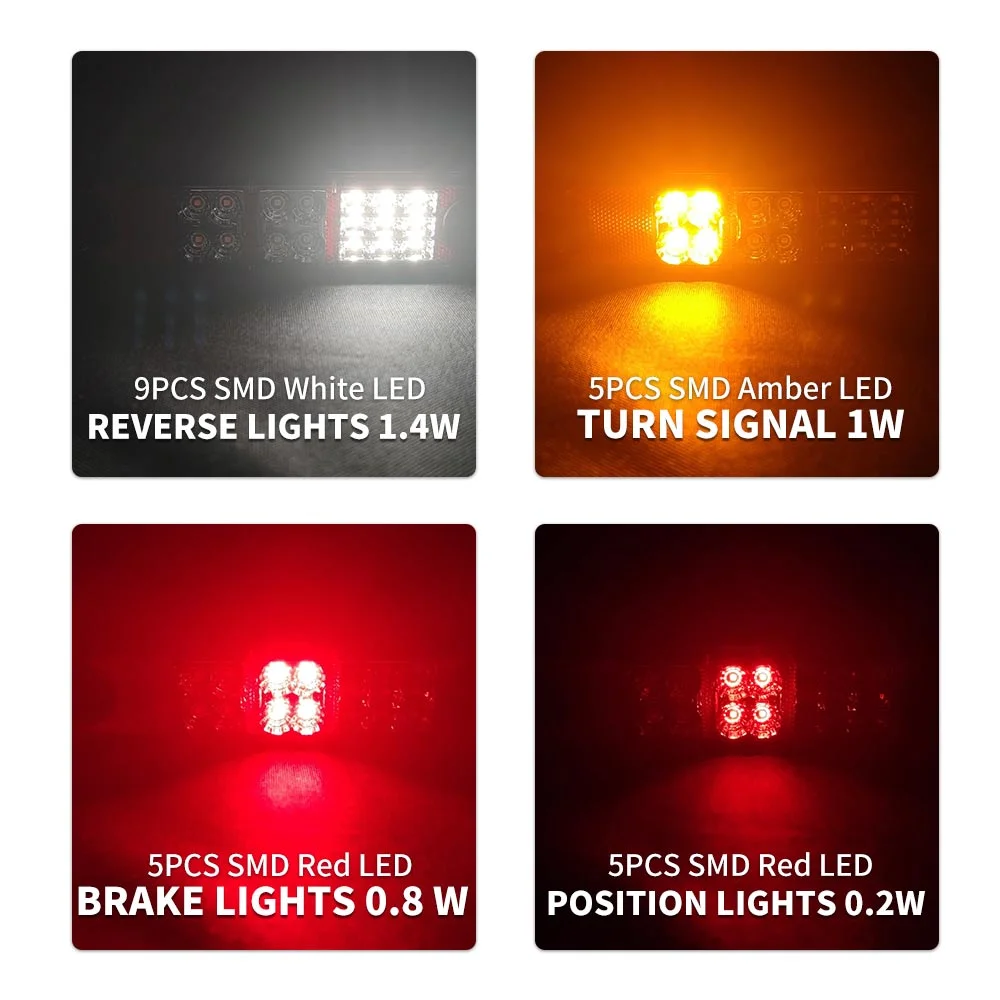
Electrical compatibility is crucial for seamless retrofitting and fleet-wide standardization. Forklift lights designed with a wide DC 10-80V input range can be installed directly onto most vehicle electrical systems—including 12V, 24V, and 48V setups—without requiring voltage converters. This simplifies procurement and maintenance. For electric forklifts, power consumption directly impacts battery life. Efficient LED systems minimize this drain. For example, a position light function drawing as little as 0.2W ensures continuous operation without significantly affecting the vehicle’s runtime.
Assessing Beam Color Functions and Environmental Sealing
Effective signaling relies on distinct, universally understood colors. A multi-function tail light assembly must use specific LED colors for each purpose: white for reverse, red for braking and position marking, and amber for turn signals. This clear differentiation is fundamental to preventing accidents. The unit’s durability is determined by its environmental sealing, indicated by the Ingress Protection (IP) rating. An IP67 or IP68 rating guarantees the light assembly is fully protected from dust ingress and can withstand water immersion, ensuring reliable function in demanding industrial environments, including outdoor yards and wash-down zones.
Choosing the Right Red and Blue Forklift Safety Lighting System
Choosing between red and blue lights is a technical decision based on your facility layout and primary safety hazards, not just color preference.
Selecting the correct safety lighting system is critical for preventing pedestrian-related incidents. Red and blue lights serve distinct functions, and understanding their intended applications ensures you deploy the most effective visual warnings for your specific operational environment.
Differentiating Red Zone and Blue Spot Applications
Red and blue safety lights solve different problems. Red lights are typically line-style beams used to create a clear “no-go” perimeter along the sides of the forklift. These red zones establish a visible boundary, usually 2 to 5 feet wide, that warns pedestrians to maintain a safe distance from the machine’s swing radius and sides. They are most effective at preventing accidents where workers get too close to a moving or turning forklift.
Blue lights are almost always focused spotlights. They project a concentrated beam of light 10 to 20 feet in front of or behind the forklift. This function serves as an early warning system, alerting employees that a vehicle is approaching a blind corner, entering an aisle, or backing out of a trailer. The choice between red and blue—or the decision to use both—should align directly with your internal risk assessment and traffic management protocols.
Assessing Environmental and Operational Light Requirements
The physical environment dictates the necessary light specifications. In facilities with high ambient light, you need a warning light with a higher lumen output to ensure the projected beam is bright and clear. The floor surface also plays a significant role; a polished, light-colored concrete floor will provide high contrast, while a dark, scuffed, or dirty floor can absorb the light and reduce its visibility, requiring a more powerful unit.
Your operational layout determines the ideal beam pattern. A focused spot projection is best for long, narrow aisles, giving pedestrians maximum warning time before a forklift appears. A line projection is better suited for establishing clear perimeter boundaries in more open areas. Aligning the beam type with the workspace ensures the visual cue is intuitive and effective.
Confirming Electrical Compatibility and Physical Durability
Before purchasing, you must verify technical specifications to ensure longevity and proper function. First, check the forklift’s electrical system. Most forklifts operate on 12V, 24V, or 48V DC systems. Selecting a light with a wide operating voltage range, like DC 10-80V, ensures compatibility across a mixed fleet and prevents electrical damage.
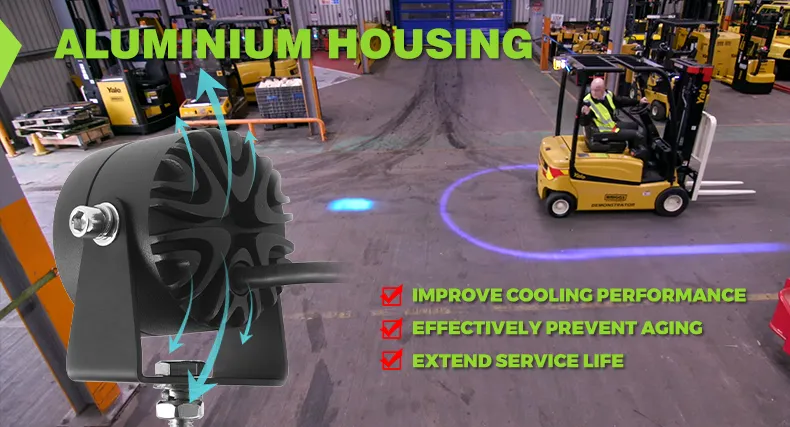
The light must also withstand the industrial environment. An IP67 rating is the industry standard, signifying the housing is completely sealed against dust and can withstand temporary water immersion. Look for units built with die-cast aluminum housings that effectively dissipate heat and resist impacts. A shatterproof polycarbonate lens is also essential to endure the constant vibration inherent in forklift operations.
1334R: Best LED forklift lights by environment and duty level
Matching LED light specifications directly to your operational environment prevents overspending on unnecessary features and ensures safety compliance.
Standard Indoor Warehouses: Balancing Efficiency and Illumination
For standard indoor operations, the goal is clear visibility without creating hazards. Select lights with an output of 4,000–6,000 lumens to illuminate aisles effectively without causing debilitating glare for operators or pedestrians. Prioritize models with extremely low power consumption, such as tail light functions drawing as little as 0.2W to 1.4W, to maximize battery life on electric forklifts. A minimum IP67 rating is necessary to protect against the dust and occasional moisture found in most warehouses. Using lights with a wide-voltage DC10-80V range simplifies inventory management and ensures compatibility across a diverse fleet of equipment.
High-Traffic Logistics Hubs: Durability for 24/7 Operations
In high-traffic, 24/7 logistics centers, equipment failure is not an option. Equip forklifts with high-vibration resistant lights built with rugged aluminum housing and shatterproof polycarbonate lenses. Implement dedicated blue or red pedestrian warning lights to project clear “keep out” zones on the floor, drastically reducing collision risks in fast-paced environments. To minimize maintenance downtime, choose lights engineered with high-quality LED chips from suppliers like OSRAM or Philips. For large staging areas and loading docks, opt for brighter, focused beams in the 6,000–12,000 lumen range to properly illuminate trailer interiors and open spaces.
Outdoor Yards and All-Weather Sites: IP68 and Thermal Stability
Operations exposed to the elements demand uncompromising protection. Mandate an IP68 rating for all lighting, which ensures complete sealing against fine dust ingress and long-term water immersion. Verify that the lights have a proven operating temperature range of at least -40°C to 105°C to guarantee startup and stable performance in extreme cold or heat. Lenses must have a UV-resistant coating to prevent the yellowing and material degradation that occurs from constant sun exposure. For night operations, specify lights with powerful spot or combo beams capable of illuminating distances of 200 meters or more.
Specialized Environments: Cold Storage and Wash-Down Areas
Cold storage and food-grade facilities present unique challenges. Require fully sealed, IP68-rated units that can withstand condensation from rapid temperature shifts and survive high-pressure cleaning protocols. Confirm that the lights offer reliable startup and consistent operation at temperatures down to -40°C for freezer applications. The light’s housing should be smooth and corrosion-resistant to prevent contaminant buildup and simplify sanitation. In these wet conditions, using integrated tail light assemblies that combine brake, reverse, and turn signal functions into a single unit reduces the number of potential water ingress points and simplifies wiring.
Durable LED Work Lights Built to Last
Final forklift lighting buying checklist
Verify Electrical and System Compatibility
Before any purchase, run a full electrical compatibility check. Mismatched voltage or excessive power draw can damage both the light and the forklift’s electrical system, leading to unexpected downtime. Get these details right to ensure a seamless integration.
- Confirm Voltage Range: The light must support a wide voltage range, such as DC 10-80V, to match your fleet’s power systems without needing adapters. This ensures consistent performance across different models, whether they are AC or DC powered.
- Check Power Consumption: Review the power draw for each function. A low-draw position light (e.g., 0.2W) minimizes battery drain during standby, while the brake light (e.g., 1W) provides necessary brightness without overloading the system. This is critical for maintaining battery life on electric forklifts.
- Match Wiring and Mounting: Verify the light’s connectors are compatible with the forklift’s existing wiring harness. Check that its mounting points align with the vehicle’s frame to avoid custom fabrication and extra labor during installation.
Confirm Safety Certifications and Functional Compliance
Compliance isn’t optional. Using uncertified or non-compliant lighting creates direct safety risks and potential liability. Ensure every light meets established operational standards for your region and application.
Assess Material Durability and Environmental Sealing
Forklift lights operate in harsh environments filled with dust, moisture, and vibration. The materials and construction directly determine the light’s operational lifespan and reliability. Scrutinize the build quality to avoid frequent replacements.
- Demand High Ingress Protection: The light must have a high IP rating, ideally IP67 or IP68. An IP67 rating guarantees it is completely sealed against dust and can withstand temporary water immersion, making it suitable for outdoor use or wash-down procedures.
- Inspect Housing and Lens Materials: Look for an aluminum alloy housing, which provides excellent heat dissipation and structural strength. The lens should be made from impact-resistant polycarbonate (PC) to endure vibration and resist shattering from minor impacts.
- Check the Operating Temperature Range: A wide operating temperature range, like -40 °C to 105 °C, ensures the light will perform reliably in all of your facility’s conditions, from cold storage freezers to hot, unconditioned warehouses.
Conclusion
Choosing the right LED forklift warning lights is a key operational decision that directly impacts safety, compliance, and equipment longevity. Matching specifications like lumens, voltage, and IP ratings to your specific work environment ensures reliable visibility and reduces long-term maintenance costs. This diligence protects both your team and your fleet investment.
Use this guide’s checklist to assess your current lighting setup and identify areas for improvement. When you’re ready to explore certified, durable lighting solutions, contact our team for a full product catalog or to discuss your fleet’s specific requirements.
Frequently Asked Questions
How to choose a LED light?
When choosing an LED light, prioritize features that enhance safety and durability for industrial environments. Select lights with adjustable beam angles to minimize shadows and blind spots, improving operator visibility. Ensure the lights are made from durable materials that can resist shocks and vibrations. Finally, verify that the lighting system meets modern safety standards, such as OSHA regulations, to ensure compliance and reduce workplace risk.
How can you tell if an LED light is good quality?
A good quality LED light is characterized by its durability, efficiency, and long lifespan. High-quality LEDs are built with robust materials to resist shocks, vibrations, and extreme temperatures, ensuring reliable performance. They are also highly energy-efficient, which lowers power consumption and extends equipment battery life. Their significantly longer lifespans compared to traditional bulbs reduce maintenance costs and operational downtime.
Which is better, 4300K or 6000k LED?
The provided research does not compare specific color temperatures like 4300K or 6000K. Instead, it emphasizes choosing LED lighting based on its functional benefits for safety and efficiency. The primary considerations should be whether the light provides bright, consistent illumination to improve operator visibility, offers adjustable beam angles to reduce blind spots, and complies with safety regulations to prevent accidents.
Is 100W LED brighter than 60W LED?
While wattage measures power consumption, it is not the sole indicator of brightness in LEDs. The key benefit of LED technology is its efficiency—it converts a higher percentage of energy into light rather than heat. This means an LED can produce bright, consistent illumination while consuming less power than traditional bulbs. Therefore, evaluating an LED’s performance, durability, and safety features is more critical than comparing wattage alone.